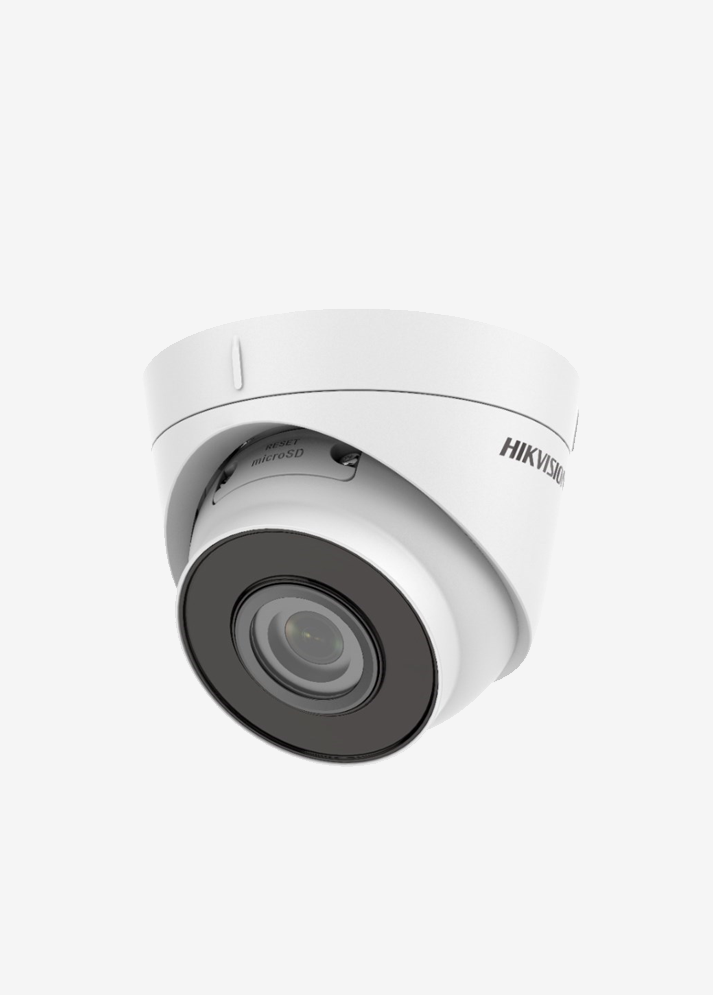

We receive many emails asking how to detect hidden cameras in your home, hotel, or workplace. That's why we wanted to share some information with you.
To find out if there is a hidden camera installed in your home without your permission, you can systematically apply a few simple but effective methods:
1. Visual and Physical Examination
Unusual items: Check all items one by one, such as wall clocks, plug adapters, USB chargers, smoke detectors, ceiling-hanging ornaments, and plant pots, which may appear ordinary but may contain hidden cameras.

Focus on the lenses or small holes of the devices, usually with a slot of 2–3 mm in diameter.
Cables and cable runs: Keep track of newly added, unsightly, or unnecessarily long cables. Hidden cameras are often hardwired for power.
Mirror test: Look suspiciously at the area behind the mirror. A one-way mirror may have been used. If there's no small gap between your fingerprint and the reflection when you touch the mirror, it could be two-way glass.
2. Check Lens Reflections
Scanning with a flashlight or phone flash : When the room is dark, shine a strong light (flashlight or phone flash) into the small holes. Camera lens glass reflects the light, creating a bright spot.
Visual inspection : Even though the lens is very small, the reflected dot can be easily detected.
3. Radio Frequency (RF) Scanning
RF detector devices : Small handheld devices are available on the market that scan for signals in the 100 MHz–6 GHz range. These detect the frequency at which active cameras are broadcasting and provide an audible and visual alert.
How to use : Move the device slowly around the room; a sudden signal increase indicates a hidden transmitter device.
4. Network Scan
Wi-Fi scanning apps : Install apps like "Fing" or "Net Analyzer" on your phone and list all devices connected to your network. Devices with unknown IP or MAC addresses may be cameras.
Wired network : You can use similar network scanners to search for active devices on Ethernet sockets.
5. Infrared and Thermal Scans
Smartphone front-facing cameras : Infrared LEDs appear in the front-facing cameras of most phones. In a dark room, activate the front-facing camera and examine the corners of the room; a small red or purple dot might indicate an IR LED.
Thermal camera applications : If you have a device with a thermal sensor (e.g., the FLIR One additional accessory), you can detect the radiated heat signature of an active camera.
6. Professional Support
If you are unable to identify the suspicious points with the steps above, you can receive technical scanning services from professionals who provide electronic security or private detective services.
These services combine RF, thermal, ultrasonic and optical scanning to find even the smallest hidden devices.
Recommendation: Repeating these checks at regular intervals will ensure that you maintain your security both technically and physically.
By following these methods step by step for your security, you can largely detect whether there is a hidden camera in your home.