
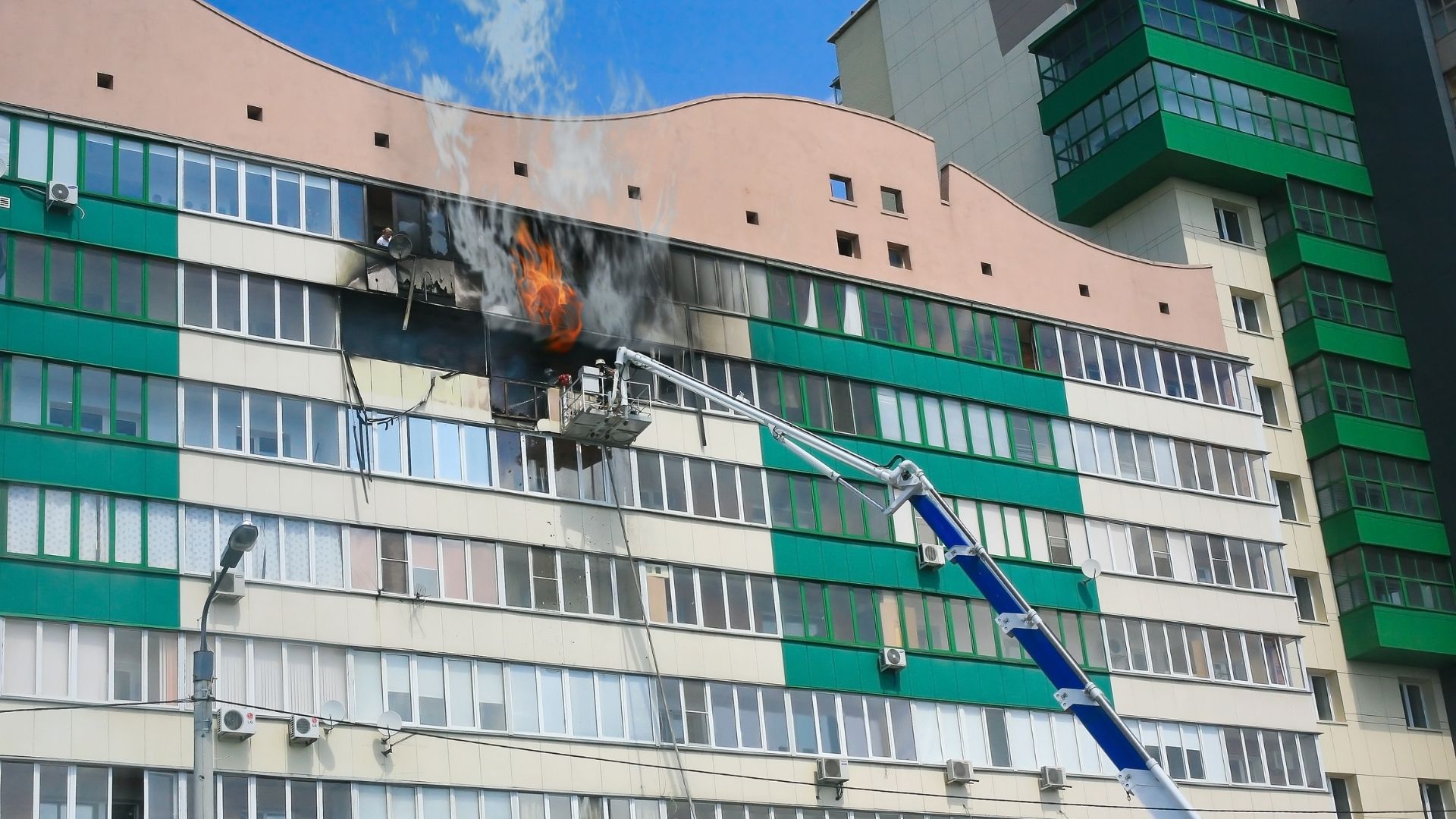
Skyscrapers, residences, business centers... High-rise buildings have become essential components of cities. However, these modern structures also have a safety aspect that shouldn't be overlooked : How will evacuations be carried out in emergency situations?
If the evacuation process is not properly managed in the event of a fire, earthquake, explosion, or sabotage, the potential loss of life and panic can become uncontrollable. Therefore, emergency evacuations in high-rise buildings must be meticulously planned, and everyone must be familiar with the plan.
⚠️ Why Is This So Important?
-
Ascent times are longer in tall buildings
-
Fire and smoke spread upwards
-
Power outages can disable elevators
-
People have difficulty coordinating in panic
-
It may take time for rescue teams to reach the building.
📋 Emergency Evacuation Stages
1. Alarm Sounding and Initial Reaction
-
Fire/situation notification is made via the building alarm system.
-
The environment is warned without panic
-
Everyone should quickly implement their escape plan.
2. Use of Escape Routes
-
Elevators should not be used
-
Stairs, directional lights and emergency exits must be followed.
-
If there is heavy smoke, stay close to the ground and cover your mouth with a handkerchief or mask.
3. Reaching the Assembly Area
-
Each building must have a designated open and safe assembly area .
-
Counting and checking should be done, missing persons should be reported.
🛠️ Structural Safety Elements
Evacuation success in high-rise buildings depends not only on human behavior but also on the building's infrastructure, including:
-
Fire escape: Smoke-protected areas that open to the outside of the building or to fire zones.
-
Emergency guidance fixtures: Illuminated exit signs
-
Pressurization systems: Prevent smoke from entering the stairwells
-
Voice announcement system: Provides guidance during evacuation
-
Sprinkler and detection systems: Control the fire before it grows
-
Generator system: Provides emergency systems operation in case of power outage
👥 The Human Factor: Education is a Must!
No matter how advanced your technology is, a lack of human education puts everything at risk. So:
-
Evacuation drills should be conducted at least once a year.
-
A written emergency plan must be provided to every employee or resident.
-
Evacuation teams and floor managers should be determined.
-
Special escape plans should be prepared for disabled individuals.
🚪 What Should Be Included in Your Evacuation Plan?
-
Floor-based escape plans (must be shown on floor plans)
-
Alternative escape routes
-
Emergency numbers and assembly area information
-
Location and closing method of electric/gas valves
-
Location of first aid and fire extinguishers
🧯 Common Mistakes
-
Elevator use
-
Blocking escape routes with objects or locked doors
-
Lack of assembly area
-
Alarm system malfunction
-
Staff not knowing what to do
-
Escape plans are posted in inconspicuous places
🧠 Things to Remember
| 📝 Status | ✅ Correct Behavior | ❌ Wrong Behavior |
|---|---|---|
| The moment of the fire | Descend the stairs, help someone else | Get in the elevator, panic |
| Smoke-filled environment | Stay close to the ground, cover your mouth and nose | Run, shout, go up |
| The power went out | Follow emergency lighting and guidance | Move randomly in the dark |
🏁 Conclusion: No Plan, Chaos
In high-rise buildings, evacuation plans save lives not only in the event of a fire, but also in all kinds of emergencies, such as earthquakes, gas leaks, and bomb threats. For these plans to be effective , they must be prepared in advance, updated regularly, and taught to all building occupants.
Don't forget:
"Emergencies happen suddenly. Being prepared is not a choice, it is a necessity."