Smoke detectors are one of the most critical components of fire detection systems. Especially in large, open spaces, a more effective solution is needed to replace traditional detectors. This is where the technology comes into play: beam-type smoke detectors .
📌 What is a Beam Type Smoke Detector?
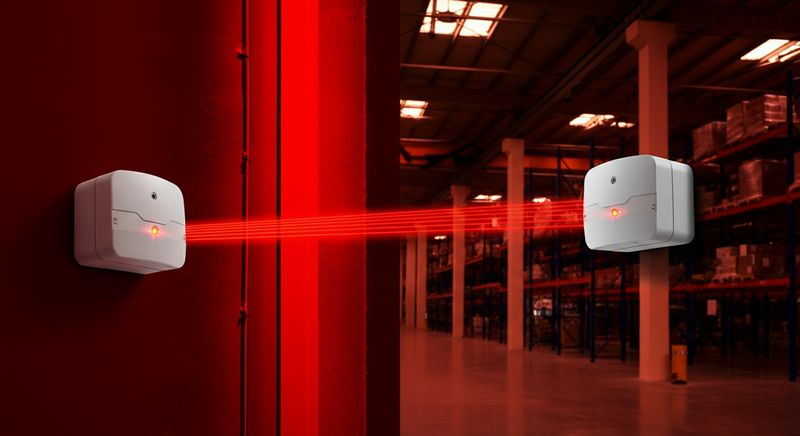
A beam type smoke detector is a fire detection device that measures the density of smoke in the air between two points using an infrared beam sent between a transmitter and a receiver.
When smoke rising in the air blocks or weakens the light beam, this is detected by the system as a sign of fire and the alarm is triggered.
⚙️ How Does It Work?
-
The transmitter unit sends infrared beam to a certain distance.
-
The receiver or reflector located opposite detects this beam.
-
A sudden decrease or change in beam intensity indicates the presence of smoke in the environment .
-
The system interprets this change and gives a fire alarm .
🏢 Where is it used?
Beam type detectors are preferred especially in areas with high ceilings and large volumes :
-
Warehouses and warehouses
-
Gyms
-
Hangars
-
Shopping malls
-
Museums, theaters
-
Factory production areas
-
Historical buildings (as less wiring is required)
✅ Advantages
-
🔹 Economical solution for large areas
-
🔹 Large distances can be monitored with a small number of detectors (between 20–100 meters)
-
🔹 Suitable for areas with high ceilings
-
🔹 Easy to install, requires little wiring
-
🔹 Less aesthetically appealing
⚠️ Things to Pay Attention to
-
Factors such as dust, smoke, and intense light in the environment may cause false alarms.
-
Vibration and building movements can disrupt beam alignment
-
Routine maintenance and cleaning should be done.
-
Careful placement should be made in areas exposed to direct sunlight.
🎯 Result
Beam-type smoke detectors provide more effective protection in large, high-volume areas with fewer devices than conventional detectors. They offer a solution that is both economical and technically efficient.
However, for these systems to operate efficiently , correct project planning, installation and periodic maintenance are essential.