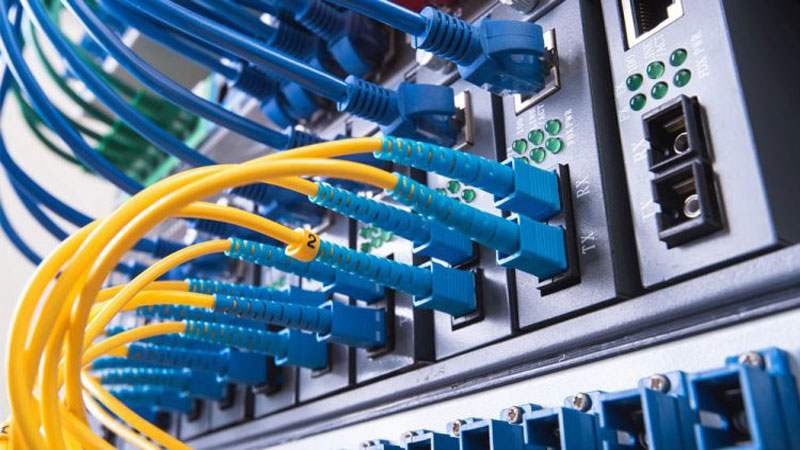
🧩 Structured Cabling Systems (Network Infrastructure): The Cornerstone of the Digital Order
In today's business world, if data flow stops, so does business. So how can this massive data traffic be controlled in offices, factories, or data centers? The answer lies in a simple yet vital system: Structured Cabling Systems .
Let's get to know this system, which forms the backbone of the digital world, better.
💡 What is Structured Cabling?
Structured cabling is a standards-compliant, centralized and organized cabling infrastructure used to ensure data transmission of computer networks, telephone systems, IP cameras, access points and other low-voltage systems.
In other words, instead of a “cable mess”, it is an organized, testable and expandable infrastructure.
🛠️ What Does the System Include?
| Component | Explanation |
|---|---|
| Cat6 / Cat6A / Cat7 Cables | Provides data transmission (LAN, IP phone, camera, etc.) |
| Fiber Optic Cables | Used for long distances and high speeds |
| Patch Panel | It is the central connection point of the cables |
| Data Sockets | Provides connection to the end user |
| Rack Cabinet | Structure for all network devices and regulating equipment |
| Switch / Router | Active network devices |
| Labeling and Color Coding | Provides ease of management |
🧠 Why Use Structured Cabling?
-
✅ Provides Future-Proof Infrastructure
-
✅ Prevents Confusion
-
✅ Ease of Troubleshooting and Intervention
-
✅ Complies with Standards (TIA/EIA 568C, ISO/IEC 11801)
-
✅ Fast Data Transmission and High Performance
🏢 In which areas is it applied?
-
Office buildings
-
Factories and production facilities
-
Shopping malls and hotels
-
Data centers
-
Hospitals and schools
-
Smart buildings
-
Residential projects (especially in central systems)
📶 Cable Types Used
| Cable Type | Speed | Distance | Area of Use |
|---|---|---|---|
| Cat5e | 1 Gbps | 100 meters | Old systems, low speed requirement |
| Cat6 | 1 Gbps – 10 Gbps | 55 meters | Ideal for today's offices |
| Cat6A | 10 Gbps | 100 meters | Places with intense data flow |
| Cat7 | 10+ Gbps | 100 meters | Areas requiring EMI shielding |
| Fiber Optic | 100 Gbps and above | for kilometers | Data centers, building to building |
📏 Things to Consider During the Project Phase
-
Needs Analysis Should Be Done: How many computers? How many IP phones? How much bandwidth?
-
Planning & Projecting: End points should be determined on floor plans
-
Proper Cable Channel and Piping: If hidden cabling is to be done, it should be planned before construction.
-
Labeling & Testing: Each cable must be numbered and termination tests must be performed.
-
Reporting: System dump must be submitted
🧯 What Does a Good Network Infrastructure Provide?
-
Seamless internet and data sharing
-
Uninterrupted security camera broadcast
-
Efficient VOIP (IP telephony) communication
-
Works seamlessly with remote access and server systems
-
Sustainability for 10+ years with upgradable infrastructure
🔄 Wiring Type Comparison
| Feature | Messy Wiring | Structured Cabling |
|---|---|---|
| Performance | Low | High |
| Troubleshooting | Difficult | Easy |
| Visuality | Irregular | Professional |
| Extensibility | Difficult | Easy |
| Standard Compliance | Usually not | Internationally compatible |
💰 Structured Cabling Cost
Prices vary depending on cable type, distance, number of endpoints, active device requirements, and site challenges.
📌 Average:
-
Small office: ₺30,000 – ₺80,000
-
Medium-sized business: ₺100,000 – ₺300,000
-
Factory / campus: ₺500,000 and above
On-site survey is required for exact pricing.
📝 Result: Robust Network, Seamless Workflow
Structured cabling systems are like the nervous system of any structure in the increasingly digital world. An infrastructure built without proper planning will eventually cause problems. However, a network infrastructure built with proper planning will operate flawlessly for years, saving both time and labor.
Don't forget:
“The invisible infrastructure determines the visible performance.”