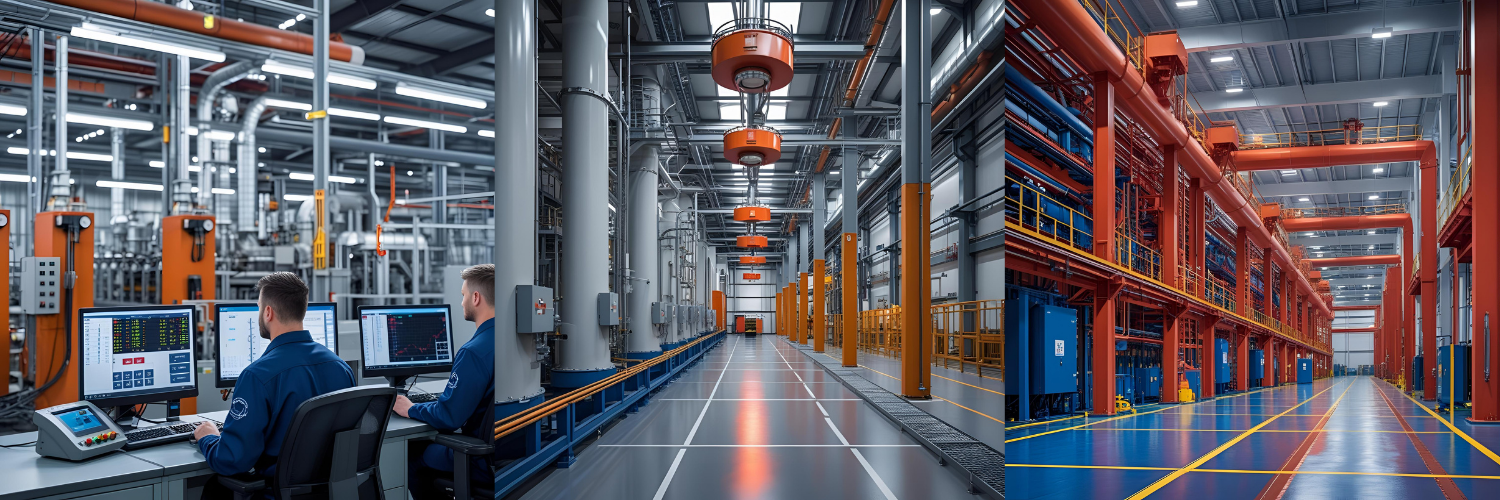
Fire safety is a vital element in industrial facilities. Numerous risk factors, such as machinery exposed to high temperatures, flammable chemicals, intensive energy use, and sparks that may occur during production, increase the importance of early warning systems in these areas. Therefore, high-performance fire detection systems are not only a safety measure but also a critical investment for business continuity and employee safety.
Why Are Custom Solutions Required?
Industrial facilities present more complex fire risks than office buildings or residential buildings. The following factors make specialized fire detection solutions essential for these areas:
-
High ceilings and large volume areas: Conventional detectors may not be able to detect effectively in these areas.
-
Dusty and dirty environments: Detection systems must be resistant to environmental factors to avoid false alarms.
-
Chemical vapors and gases: Must work integrated with gas detectors and flame detectors.
-
Intensive equipment use: The risk of electrical fire is high, so pinpoint temperature detection becomes critical.
Fire Detection Technologies That Should Be Used
A high-performance fire detection system must integrate different technologies. Here are some commonly used technologies in industrial facilities:
1. Linear Heat Detectors (Heat Sensing Cables)
✔ It is especially preferred in cable ducts, tunnels and production lines.
✔ Detects temperature changes along the entire line instead of spot temperatures.
✔ It is resistant to high temperatures and can be used in explosive environments.
2. OSID (Optical Smoke Imaging Detection)
✔ Provides advanced smoke detection in large volume warehouses and hangars.
✔ Analyzes the movement of smoke in three dimensions by combining laser and imaging technologies.
✔ It has high tolerance to obstructions such as dust and steam.
3. Flame Detectors
✔ Provides instant detection in environments where there is an open flame.
✔ It is the ideal solution for petroleum, chemical and paint facilities.
✔ Sensitive to different flame types with IR/UV based models.
4. Aspirating Smoke Detectors (VESDA)
✔ It detects smoke at micron level by continuously sucking the ambient air.
✔ Ideal for early intervention in clean rooms, automation panels or critical production lines.
✔ It can give an alarm even at very low smoke levels.
5. Gas Detectors
✔ Detects leaks of flammable or toxic gases.
✔ It is mandatory in areas where gases such as LPG, methane, propane are used.
✔ Can be integrated with BMS (Building Management Systems).
Things to Consider in Fire Detection Systems
➤ Area Analysis: Each facility's fire risk map is different. Choosing the right product based on risk analysis is critical.
➤ Correct Detector Positioning: Factors such as ceiling height, air flow, and shelf structure must be taken into account for correct detector placement.
➤ Explosive Environment Compatibility (Ex-Proof Products): ATEX certified equipment is mandatory in facilities containing chemicals and flammable substances.
➤ Alarm Notification Systems: Different alarm methods such as sirens, flashers, telephone notifications, and SCADA integration should be used.
➤ Fire Extinguishing Integration: Detection systems must operate automatically and synchronously with gas extinguishing, sprinkler or foam extinguishing systems.
The Key to Performance: Smart Integration
Advanced fire detection systems aren't limited to detectors alone. They achieve peak performance when integrated with infrastructures such as fire panels, alarm systems, emergency lighting, camera systems, PAKS (Personnel Tracking), BMS, and SCADA .
An example integration chain:
➡ OSID detector detects abnormal smoke
➡ Fire panel generates alarm
➡ Shows the incident location on the SCADA screen
➡ Security cameras automatically focus on that area
➡ BMS system activates ventilation and door control
➡ Automatic extinguishing system is activated
Maintenance and Testing Process: Continuous Assurance
High-performance systems can only maintain their functionality with regular maintenance and testing.
The maintenance routine should include:
-
Physical and functional control of detectors
-
Detection sensitivity tests
-
Testing of alarm and notification systems
-
Checking the panel and cable connections
-
Checking backup batteries
Conclusion: The Price of Being Safe is Less Than the Price of Fire
High-performance fire detection systems in industrial facilities are not just a regulatory requirement; they're the smartest way to protect investment and workforce . Integrating the right products for your industry with professional design minimizes both life and property loss in the event of a fire.
Detect a fire before it starts. Don't delay. Take precautions.