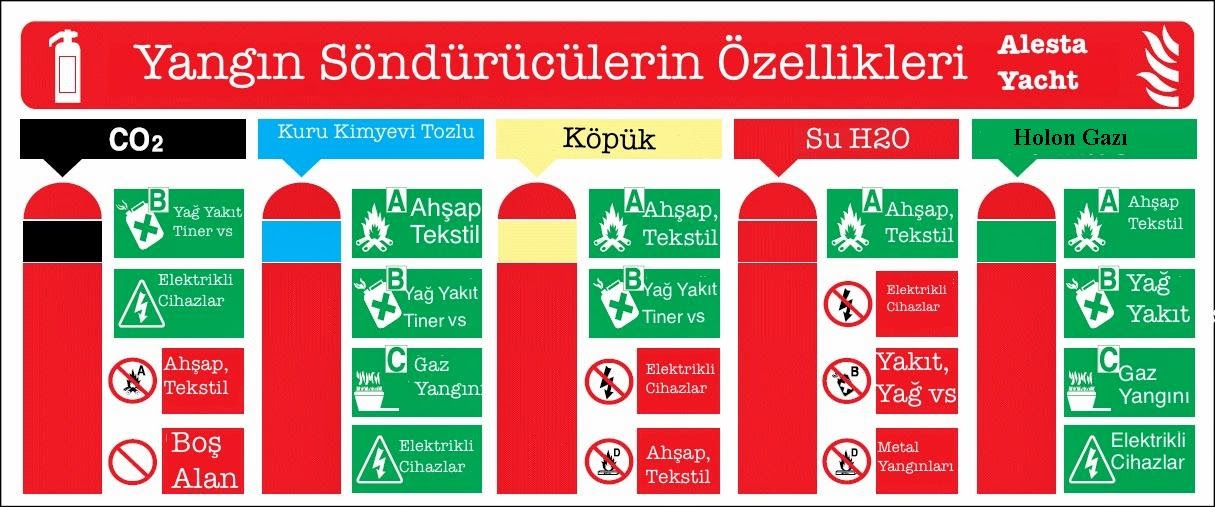
Fires exhibit different characteristics depending on their cause and the material burning. Therefore, no single extinguishing method can be used in firefighting. This is where "fire classes" come into play. Fire classes are standard categories determined by the type of burning material, and the appropriate extinguishing method for each class is different.
Importance of Fire Classes
Knowing which class a fire falls into:
-
Choosing the right extinguishing method ,
-
To prevent wrong interventions ,
-
To protect the safety of life and property ,
-
To avoid wasting time
It is of critical importance. For example, fighting an oil fire with water can increase the fire instead of extinguishing it.
Fire Classes
🔥 Class A Fires (Solid Material Fires)
-
Combustibles: Solid materials such as paper, wood, textiles, plastics.
-
Distinctive Feature: Burns slowly, forms embers, lasts for a long time.
-
Extinguishing Method: Water and foam extinguishers are the most effective.
🔥 Class B Fires (Liquid Fires)
-
Flammables: Flammable liquids such as gasoline, diesel, thinner, alcohol, paint.
-
Distinctive Feature: It spreads rapidly on the surface and has a high risk of explosion.
-
Extinguishing Method: Foam, dry chemical powder, carbon dioxide (CO₂) extinguishers.
-
Caution: Do not use water, otherwise flammable liquid will be released.
🔥 Class C Fires (Gas Fires)
-
Flammables: LPG, natural gas, acetylene, propane.
-
Distinctive Feature: It spreads rapidly and has a high risk of explosion.
-
Extinguishing Method: The gas source should be shut off, then dry chemical powder or CO₂ should be used.
🔥 Class D Fires (Metal Fires)
-
Combustibles: Magnesium, aluminum, sodium, potassium.
-
Distinctive Feature: It burns at very high temperatures and reacts dangerously with water and foam.
-
Extinguishing Method: Special metal powders are used (graphite powder, sodium chloride based extinguishers).
🔥 Class F Fires (Oil and Derivatives Fires)
-
Combustibles: Vegetable and animal fats (especially kitchen fires).
-
Distinctive Feature: It catches fire very quickly and creates an explosion effect if it comes into contact with water.
-
Extinguishing Method: Special Class F fire extinguishers (wet chemical).
Table of Extinguishing Methods According to Fire Classes
| Fire Class | Flammable Material | Extinguishing Method | What Should Not Be Used |
|---|---|---|---|
| Class A | Solid materials (paper, wood, textiles) | Water, Foam | - |
| Class B | Flammable liquids (gasoline, diesel) | Foam, KKT, CO₂ | This |
| Class C | Gases (LPG, natural gas) | KKT, CO₂ (gas must be turned off first) | This |
| Class D | flammable metals | Metal powders | Water, Foam, CO₂ |
| Class F | Oils (kitchen fires) | Wet chemical extinguisher | This |
When fighting fires, knowing the type of flammable material is critical for choosing the right firefighting method. Using the wrong extinguishing method can escalate the fire or lead to explosions. Therefore, having the right type of fire extinguishers available in both businesses and homes is a vital safety precaution.